

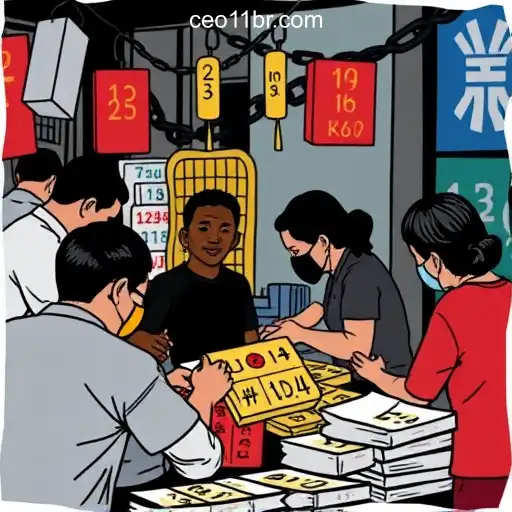
Understanding Jueteng: An Illegal Numbers Game
Jueteng is a local lottery-like numbers game that is deeply entrenched in Filipino culture. Despite its well-documented illegality, Jueteng remains popular across various regions in the Philippines, attracting a broad spectrum of participants. The game's simplicity and easy accessibility make it appealing to many, while its unofficial status provides an entry point for under-the-table practices that challenge law enforcement efforts.
The Mechanics of Jueteng
The mechanics of Jueteng are relatively straightforward, contributing to its widespread adoption. Players select a combination of two numbers, typically ranging from 1 to 37, and place bets through local bet collectors, known as cabo or kubrador. The winning numbers are drawn at random, often in an undisclosed location, and winners are rewarded with a payout that's significantly higher than their original stake, sparking not only hope but also addiction among many bettors.
The Social Fabric of Jueteng
Jueteng provides more than just entertainment; it also forms part of the social fabric across various Philippine communities. The game is often intertwined with local customs and is sometimes tacitly accepted as a social norm. Despite its illegal status, Jueteng persists due to deep roots in local traditions, though it frequently becomes a contentious topic within political and social debates.
The Economic Impact: A Double-Edged Sword
The economic impact of Jueteng is multifaceted. On one hand, it offers an economic boost to marginalized communities by providing informal employment opportunities to those involved in its operation. On the other hand, it deprives the state of revenue that would otherwise be collected through legal gambling operations. This duality makes it a controversial subject, especially when considering government's ongoing struggle to combat poverty and promote economic development.
Political Ramifications
Jueteng's tentacles stretch into the political sphere, where accusations of corruption involving police forces or elected officials frequently arise. Allegations that political figures might have interests in the continued operation of Jueteng have often emerged, highlighting the challenges in law enforcement and governance. This has led to a cyclical debate on whether to enforce rigorous crackdowns or perhaps consider legalization as a means to neutralize its shadow economy effects.
Jueteng and Law Enforcement Challenges
Combating Jueteng operations presents significant hurdles for law enforcement agencies. Raids and sting operations are commonly employed but often yield limited success due to the clandestine nature of the game. Moreover, the socioeconomic benefits touted by Juetengers allow them to strategically defend their operations, portraying themselves not as criminals but as community service providers offering lucrative opportunities that the formal market fails to provide.
The Digital Shift: From Jueteng to CEO11.bet Cassino❤️ Exploda nas Mesas!
The advent of online casinos like CEO11.bet Cassino❤️ Exploda nas Mesas! marks a paradigm shift in gambling practices in the Philippines. Unlike Jueteng, digital platforms offer a more regulated and structured environment for gaming, coupling technology with entertainment, thereby setting a new cultural trend that appeals especially to younger demographics who are keen on digitization.
A Comparison of Culture and Accessibility
While Jueteng thrives on community-based operations, online platforms like CEO11.bet provide a global outreach, appealing to a widespread audience with diverse game offerings. However, this accessibility raises questions about digital addiction and the need for regulation to prevent online gambling from spiraling into a societal issue paralleling Jueteng's cultural stigma.
Regulatory Innovations
Online casinos also bring opportunities for government revenue in ways that Jueteng does not. These platforms are often subjected to strict regulations and compliance measures to ensure game fairness and transparency. This aspect of regulation is integral to their legitimacy, contrasting sharply with the unregulated nature of Jueteng.
The Future of Gambling in the Philippines
As the Philippines inches closer to digital transformation, the future of nationwide gambling — both illegal and legal — remains uncertain. Jueteng, with its storied history, continues to pose challenges, yet offers lessons in regulation, cultural sensitivity, and economic necessity that legal platforms like CEO11.bet Cassino❤️ Exploda nas Mesas! can learn from. The complex layers of legal status, cultural impact, and economic interdependence make Jueteng a pivotal issue within broader conversations regarding the effective governance of gambling in the Philippines.